♨
Steam & textiles
Mechanized production moves work from hand tools toward factories.
→
It didn’t happen because of one invention. It happened because every new system made the next one possible.
Start the machineMost goods move slowly, messages travel only as fast as a person can carry them, and production depends on skilled hands. A national economy cannot run until three systems connect.
Before you study the parts, see the system. Move across the filmstrip: each breakthrough creates the conditions for the next.
Mechanized production moves work from hand tools toward factories.
The Bessemer process makes strong material cheaper and faster to produce.
Railroads move goods. Telegraph lines move information. A national market forms.
New power, light, lubrication, and communication extend industrial reach.
Corporations raise capital. Trusts consolidate firms. Industrialists build empires.
Workers organize against harsh conditions; farmers organize against debt and rates.
Industrial power produces pressure for political and economic change.
Before industrialization, skilled hands and local workshops limit how fast and how far goods can move.
Nationwide commerce required three systems to evolve together: production, transportation, and communication.
Begins in Britain. Textiles, steam power, and mechanized production replace slower hand methods.
Steel, oil, electricity, and communications enable large-scale industry and national networks.
To sell one factory’s goods across the nation, which systems need to improve?
Mechanization and the assembly line divide production into repeatable steps. Output rises and prices can fall—but work also becomes faster, more repetitive, and controlled by the factory clock.
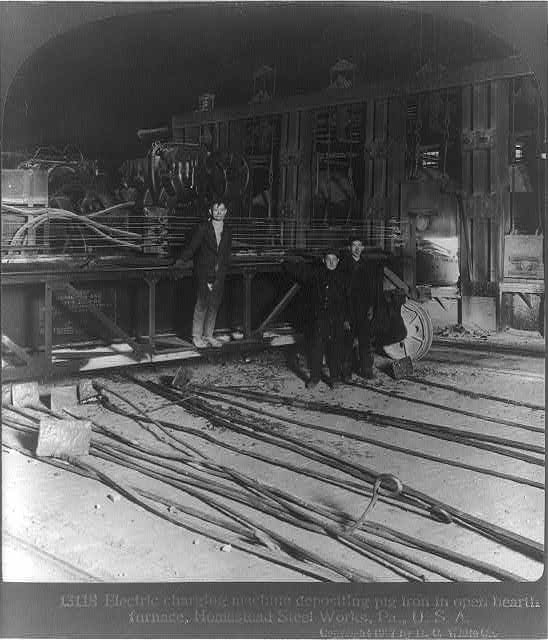
Henry Bessemer’s process removed impurities from molten iron efficiently. Steel became cheaper to make in large quantities—strong enough for rails, bridges, buildings, and machines.
The transcontinental network linked regions, moved people and goods, created jobs and towns, accelerated western settlement, and multiplied demand for steel.
Towns once set time by the local sun. Rail schedules crossing many local times became confusing and dangerous. Railroads helped drive the adoption of standardized time zones.
Samuel Morse’s telegraph sent coded electrical signals over long distances. Alexander Graham Bell’s telephone carried natural speech. Information began moving faster than people or goods.
Hint: the system that follows steel across the continent.
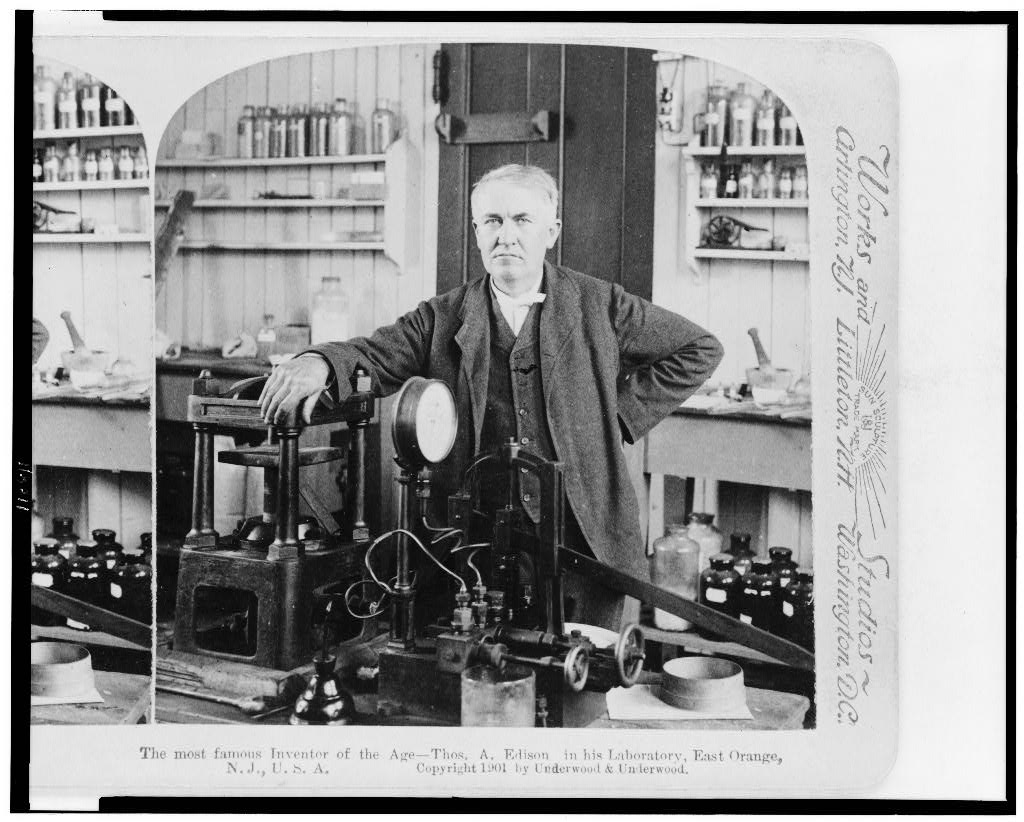
Electric light extended productive hours and reshaped streets, homes, and factories. Thomas Edison developed practical electrical systems; Lewis Latimer improved carbon filaments and helped make electric lighting more durable and accessible.
Invention network / Select a person to connect problem → invention → impact
Telegraph and Morse code speed long-distance information.
Telephone carries speech across distance.
Practical lighting and power systems expand electrification.
Improved carbon filaments and electric-light manufacturing.
Railway electrical and communication inventions improve coordination and safety.
Automatic lubricators help machinery run without frequent stops.
Folding cabinet bed answers the problem of limited urban space.
Builds a major hair-care business and sales network for Black women.
Shoe-lasting machine dramatically increases shoe production.
Safety hood and traffic signal innovations address industrial and urban risks.
Choose an inventor above. The machine will show the problem they attacked and the change their work made possible.
Refined petroleum supplied fuel and lubrication. Pipelines, pumps, tanks, and rail links formed a network—one that John D. Rockefeller’s Standard Oil worked to control.
Each structure changes who owns the company—and how much economic power can be gathered under one system.
One owner controls the business and carries its risk.
Two or more owners share control, resources, and risk.
Stockholders invest; the company exists as a separate legal entity.
Multiple companies are controlled together under trustees.
One firm dominates a market, weakening competition.
Carnegie Steel controls stages from raw materials to transportation to production and distribution—cutting costs and dependence on outsiders.
Standard Oil bought or pressured competing oil firms at the same stage of business, negotiated railroad advantages, and built pipelines. Greater efficiency came with less competition and more market power.
Captain argument: industrialists expanded production, lowered some costs, created jobs, and funded philanthropy. Robber argument: they crushed competition, concentrated wealth, influenced government, and exploited labor. Evidence can support both interpretations.
Henry Flagler extended rail service down Florida’s Atlantic coast, pairing railroads with hotels and development. The line encouraged tourism, settlement, and the shipment of agricultural products.
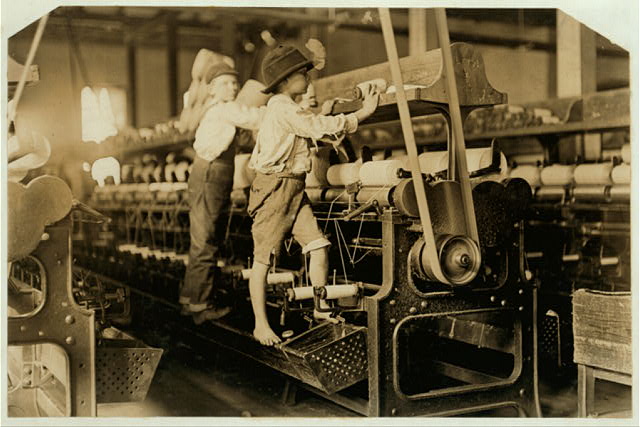
Long hours, low wages, unsafe workplaces, child labor, and crowded sweatshops explain why workers organized. One worker had little leverage. Many workers could stop production.
Cause: industrial labor’s weak position. Consequence: a broad national organization including many skilled and unskilled workers.
Cause: repeated wage cuts during depression. Outcome: nationwide disruption and violent suppression; labor conflict becomes a national issue.
A bomb and violence at a Chicago labor rally damage the public image of radical labor. That year, Samuel Gompers helps form the AFL, focused on skilled workers, wages, hours, and conditions.
A steel dispute becomes an armed clash. The union is defeated, showing the power of corporations and government-aligned force.
Wage cuts and high company-town costs trigger a rail boycott led by Eugene V. Debs. Federal intervention breaks the strike.
The same network that opened markets also created dependence on railroads, banks, and distant prices. Falling crop prices plus debt, freight rates, and equipment costs drove organization.
Populists argued that adding silver to the money supply could create inflation. Higher prices could increase farm income and make fixed debts easier to repay. Supporters of the gold standard wanted a more limited money supply and stable value.
Tighter supply → lower inflation pressure → debt stays harder to repay.
William Jennings Bryan’s famous speech attacked a gold-only standard and championed free silver. The debate connected money policy to who would bear the burden of industrial change.
National freight networks are the ancestors of today’s rapid delivery systems.
Information separated from physical travel—and kept accelerating.
Homes, cities, and businesses still depend on connected power systems.
Capital, scale, consolidation, and regulation remain central economic questions.
Workers still organize around wages, hours, safety, and power.
Transportation corridors continue to shape settlement, tourism, and growth.
Keep the boiler hot by answering quickly. Correct answers build pressure and a production streak. Three mistakes jam the machine—but every shift can be restarted with a new mix of questions.
Complete a ten-question shift before the clock or the machine gives out. Use the answer buttons—or keys 1 through 4.